

Decoding the Matrix: What Wine Labs really say about your Glass
When you look at an official wine certification sheet, it looks less like a romance novel and more like a high school chemistry test. And I am hopeless at the latter!
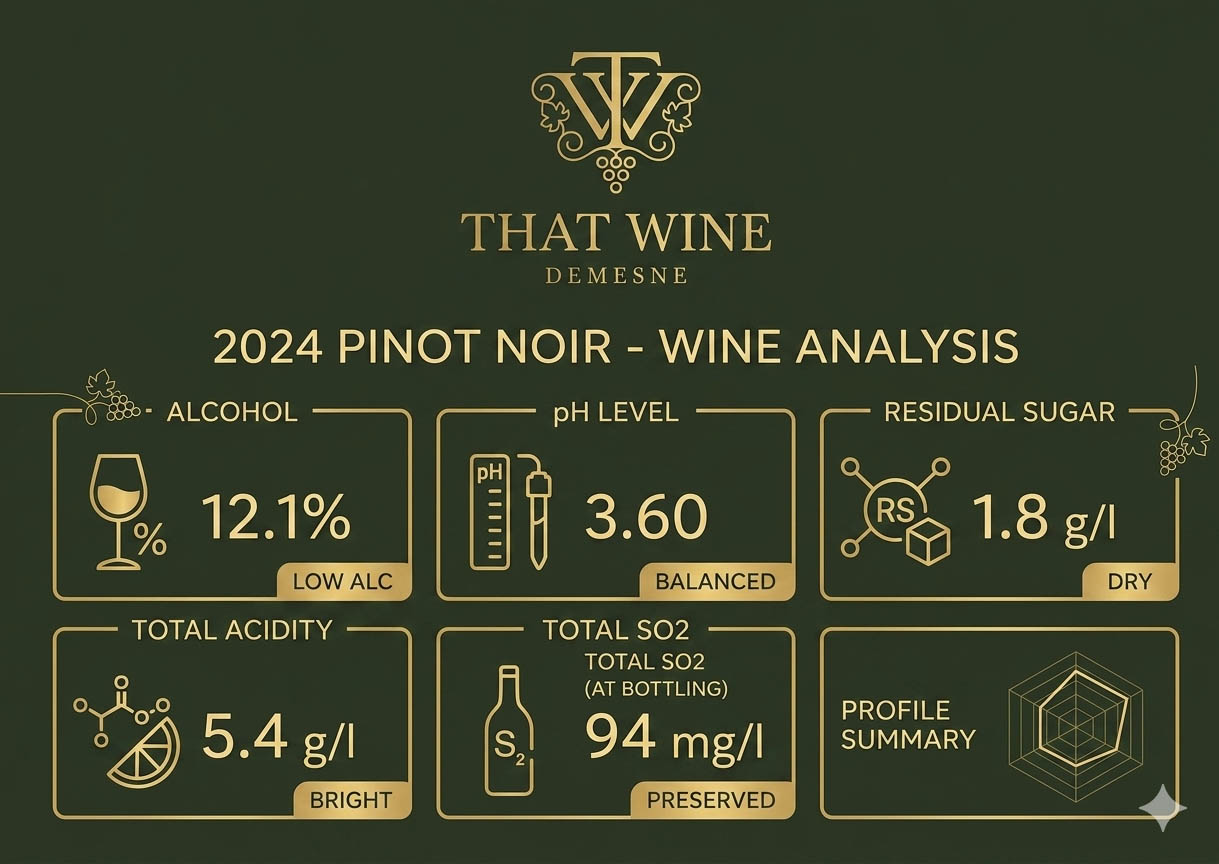
When our 2024 Pinot Noir came back approved from the Wine Certification Authority, it was accompanied by a string of numbers: Alcohol 12.1%, pH 3.60, Residual Sugar 1.8 g/l, Total Acid 5.4 g/l, and Total SO₂ 94 mg/l.
But what do these digits actually mean when the cork pops and the wine hits your tongue?
1. Alcohol: 12.1% (The “Goldilocks” Zone)
What it is: The percentage of your wine that is pure ethanol.
In a world where heavy-hitter reds regularly clock in at a fiery 14.5% or 15%, 12.1% is delightfully old-school. Pinot Noir is a thin-skinned, elegant grape that thrives in cooler maritime climates. This lighter alcohol level means the wine isn’t “hot” or burning. Instead, it’s light-to-medium-bodied, vibrant, and lets the delicate red fruit flavors take center stage.
2. Total Acidity: 5.4 g/l (The Spine)
What it is: The weight of the natural acids (mostly tartaric) floating in every litre of wine.
Think of acidity as the spine or the structural scaffolding of the wine. At 5.4 grams per litre, this wine has a crisp, bright tanginess. It’s the component that makes your mouth water, makes the wine feel incredibly fresh, and prevents it from tasting flat or flabby. It is also the secret weapon that makes it spectacular with food.
3. pH: 3.60 (The Balance Beam)
What it is: The logarithmic measurement of how strong those acids are.
While Total Acidity tells us the quantity of acid, pH tells us its intensity. For a New World Pinot Noir, 3.60 is right in the sweet spot. It means the wine balances bright, refreshing crispness with a smooth, velvety mouthfeel. It also tells us the wine is stable, happy, and aging gracefully in the bottle.
4. Residual Sugar: 1.8 g/l (The “Bone Dry” Illusion)
What it is: The natural grape sugar left over after the yeast finished its fermentation party.
A tiny 1.8 grams per litre is technically way below the human threshold for tasting sweetness, meaning this wine is bone dry. So why does Pinot Noir sometimes smell or taste like sweet, ripe cherries or strawberries? That is the magic of fruit aromatic compounds playing tricks on your brain! The sugar isn’t doing it; the beautiful fruit is.
5. Total SO₂: 94 mg/l (The Bodyguard)
What it is: Sulfur Dioxide, measured in milligrams per litre.
Sulfites are the ultimate bodyguards of wine. They protect the delicate aromas from turning into vinegar when exposed to air, and stop wild bacteria from ruining the bottle. The legal limit for red wine in South Africa sits comfortably much higher, so at a modest 94 mg/l, our Pinot Noir uses just enough protection to stay perfectly fresh, clean, and vibrant while remaining incredibly low-intervention.
When you combine a moderate 12.1% alcohol with bright acidity and a dry finish, you get a classic, elegant, cool-climate coastal Pinot Noir. It’s a wine built on finesse, not brute force. And now you have the science to prove it!